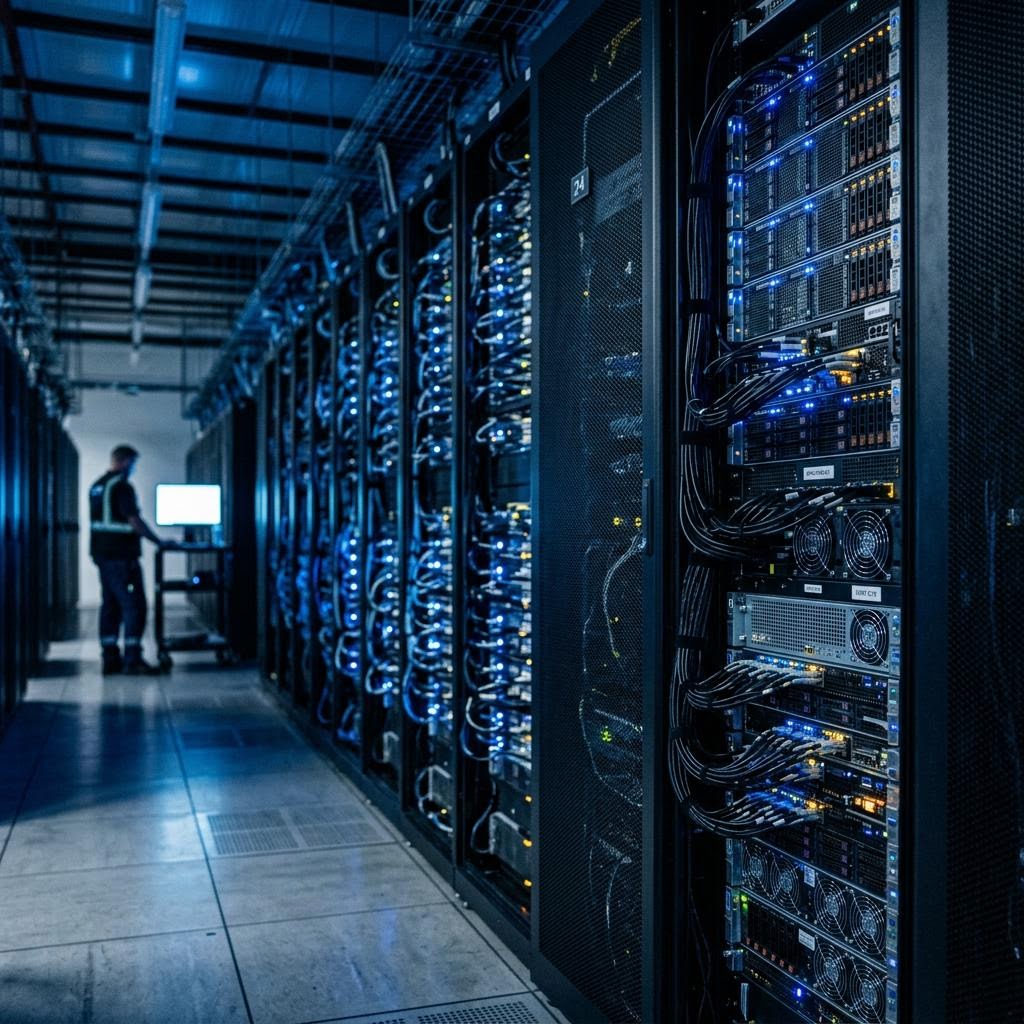
Training and serving large AI models requires physical infrastructure at a scale that turns software ambitions into industrial supply chains. For investors, the useful exercise is to trace capital expenditure from the companies that announce it to the companies that receive it.
Layer one: accelerators
Specialised processors perform the matrix calculations at the core of model training and inference. This layer has attracted the most attention and features high margins, concentrated supply and heavy dependence on advanced manufacturing capacity at a small number of foundries.
Layer two: memory and networking
Accelerators are only as productive as the data that can be fed to them. High-bandwidth memory and high-speed interconnects have become constraints in their own right. Memory has historically been a cyclical industry; investors should ask whether AI demand changes that cycle or merely amplifies it.
Layer three: facilities and power
Large data centres require grid connections, cooling and long-lead electrical equipment. Power availability has emerged as a gating factor in several regions. Utilities, electrical equipment makers and cooling specialists may see demand linked to AI build-outs, with regulated returns or longer project timelines that differ from chip economics.
Infrastructure cycles historically overshoot. That is not a forecast, but it is a reason to understand where each company sits in the chain and how exposed it is to a pause in spending.